
When buying used clothing wholesale, the lowest price per kilogram is only one part of the decision. The more useful question is whether the stock fits the way your business sorts, stores and sells clothing.
Sorted and unsorted clothing serve different purchasing needs. A retailer looking for a specific category may have different priorities from a business with its own sorting operation. Understanding that difference helps you ask better questions before agreeing an order.
What is sorted used clothing?
Sorted clothing has been selected according to an agreed specification. Depending on the supplier and order, that may involve garment category, condition, season or a combination of these factors.
A buyer might request a defined clothing category or a seasonal mix suited to its market. The important point is to establish what the description means for the actual stock being offered. “Sorted” alone does not tell you the full contents, condition requirements or exclusions.
Ask for a written description of the categories and grade, how the order is packed, and what checks are applied. Confirm how defects, staining, damaged fastenings or other relevant issues are treated under the offered specification.
Sorted stock may suit buyers who want a narrower product mix or have limited capacity for handling a broad collection of clothing. It still needs to match the buyer’s customers, sales channels and destination market.
What is unsorted used clothing?
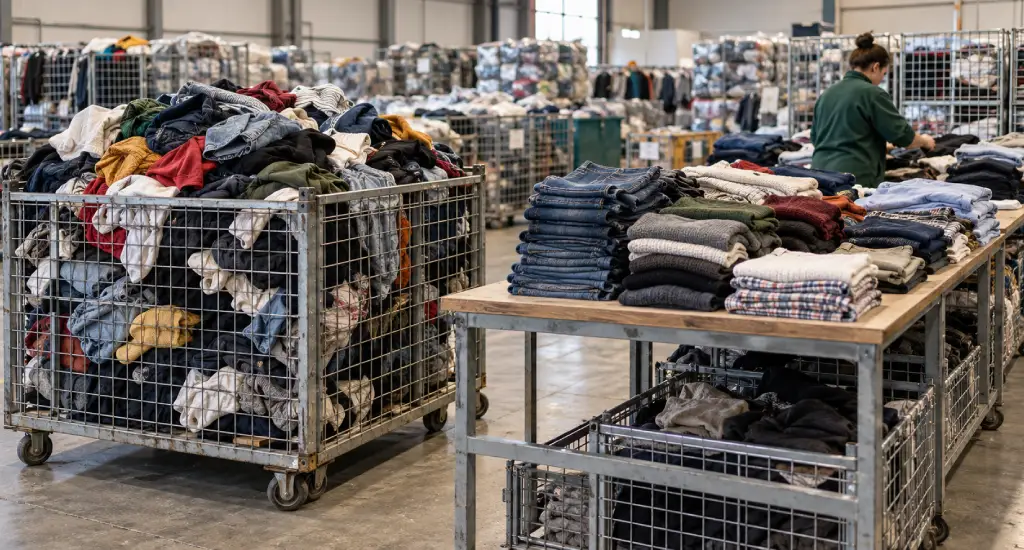
Unsorted clothing is supplied as a mixed collection that requires the buyer to carry out its own selection and grading. The description should be clarified with the supplier: ask about the source, any earlier selection and the intended contents of the mix.
This option can suit a business with the space, people and processes to separate clothing into saleable categories. It also requires a plan for items that do not fit its main sales channel.
Before choosing an unsorted load, assess how much your team can process, where the stock will be stored, and how different categories will be sold or handled. A broad mix can be difficult to manage if the business only has an outlet for a narrow range of garments.
Agree the meaning of grades and origin
Treat grade names as a starting point for discussion. Ask the supplier to explain the condition criteria behind the label rather than relying on a word such as “premium”. Photographs or a sample arrangement, where available and agreed, can help clarify expectations, but confirm what they represent.
Ask whether images show the actual lot, a representative selection or an example from another order. A photograph cannot establish the contents of every bale, so use it alongside the written stock description.
Origin needs the same clarity. In an enquiry for UK-sourced used clothing, establish whether the term refers to where the clothing was collected or supplied. It should not be taken to mean that every garment was manufactured in the United Kingdom. Collection origin and manufacturing origin are different pieces of information.
Compare the total cost of handling the order
Compare quotations on the same basis. Check the quantity, packing format, stock specification and delivery terms, then include the work your own business needs to perform.
Relevant costs may include transport, unloading, storage, sorting labour, repacking and handling items that do not fit your sales channels. Where the order crosses borders, establish which party is responsible for the applicable import arrangements and charges.
A lower purchase price can be offset by extra work or a product mix that does not match your customers. Equally, paying for a narrower selection may be unnecessary if your own operation can process a mixed load effectively. Evaluate both options against your own workflow rather than choosing solely by the headline price.
For a first order, discuss an order size and specification that your business can realistically handle. Keep records of what you receive and how it performs in your market so that future enquiries are based on your experience.
Prepare a clear wholesale enquiry
The following details give a supplier a useful starting point:
- Whether you require sorted or unsorted clothing.
- The garment categories, season and condition requirements.
- The approximate quantity and preferred packing format.
- The destination country and delivery location.
- Whether you have your own sorting operation.
- The timing and whether the enquiry is for a trial order or repeat supply.
Ask the supplier to confirm current availability, the offered specification, pricing, delivery terms and any minimum order requirement. These details should be confirmed for the enquiry rather than assumed from a previous offer.
Discuss UK-sourced clothing with TexTrade UK
TexTrade UK supplies UK-sourced second-hand clothing to wholesale buyers, with sorted and unsorted options. Visit our used clothing wholesale page to explore the supply options and discuss what fits your market.
Collections accepted from brands for recycling on an agreed non-resale basis are excluded from this wholesale supply. That restriction is separate from clothing legitimately offered for resale.
Tell our team what you buy, what your operation can process and where the order needs to go. Contact TexTrade UK about available wholesale clothing to discuss the next step.