
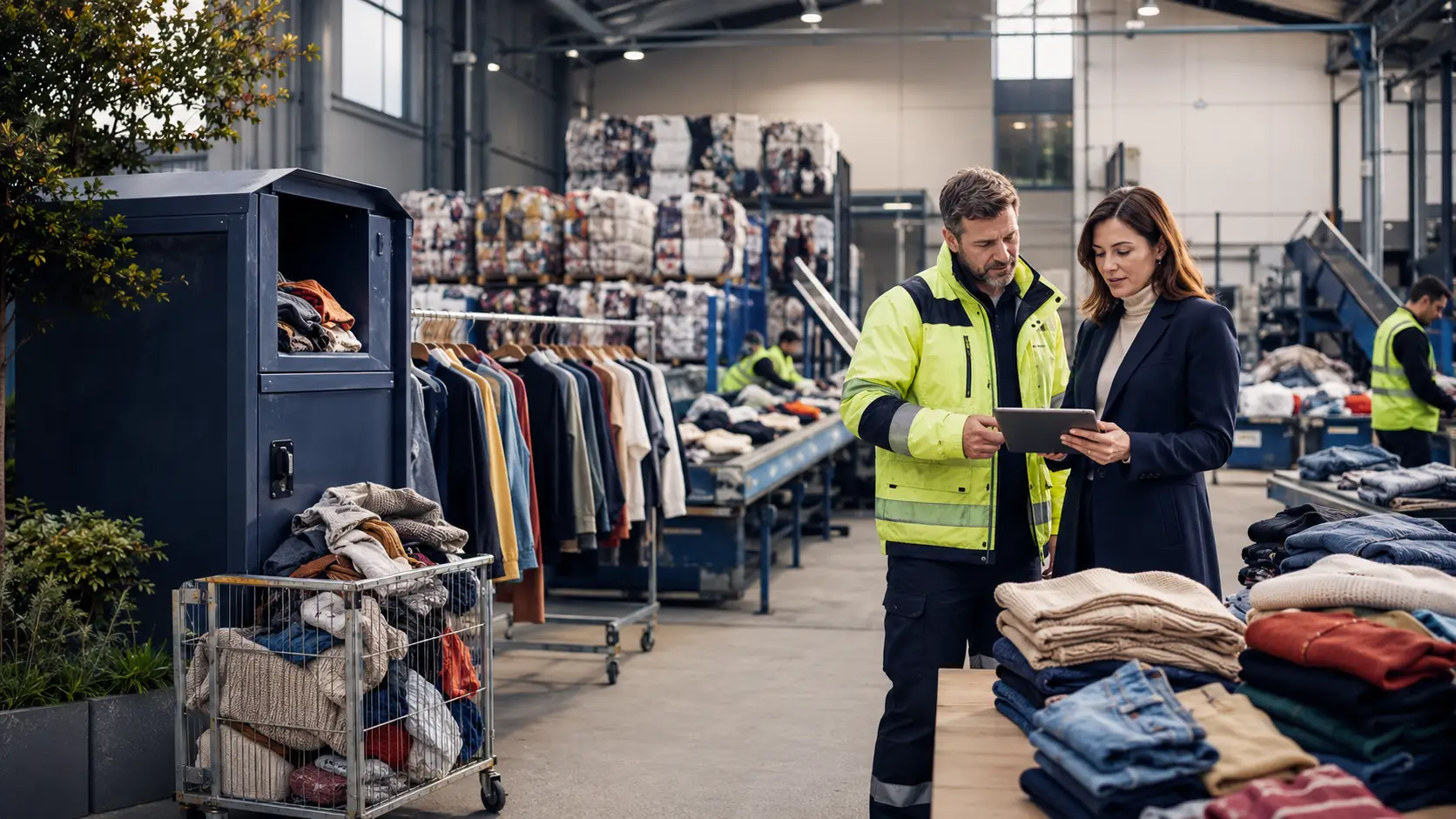
In January 2026, the UK textile sector reached a significant milestone. An industry pact of retailers, recyclers, local authorities and trade bodies signed a joint statement backing mandatory Extended Producer Responsibility (EPR) for textiles. The message was clear: voluntary schemes have failed to fund the infrastructure needed to manage post-consumer clothing waste, and legislation is now the only viable path forward.
For the councils that handle textile collections and the brands that produce the garments, mandatory EPR represents the biggest regulatory shift in a generation. This article explains what it is, what it means, and how to prepare.
What is Extended Producer Responsibility for textiles?
EPR is the principle that producers — in this case, clothing brands and retailers — bear financial and operational responsibility for their products at end of life. Instead of councils and taxpayers funding textile waste collection and disposal, the brands that put clothing on the market pay into a central system that funds reuse, recycling and infrastructure.
France has operated a mandatory textiles EPR scheme since 2007. The Netherlands followed in 2023. Sweden and Denmark are now legislating their own frameworks. The UK, despite being the second-largest clothing market in Europe, has relied entirely on voluntary action — until now.
What changes under a mandatory system
A UK textiles EPR would require brands to pay modulated fees based on the volume and type of textiles they place on the market. Fees would be lower for garments designed with durability, repairability and recycled content in mind. The revenue would fund local authority collections, sorting infrastructure, and public awareness campaigns.
For the first time, a clear funding stream would exist for the collection, sorting and reprocessing of used textiles at scale. This solves a structural problem: currently, councils receive no dedicated central government funding for textile collection. The cost is absorbed into general waste budgets, and textile banks are often maintained through charitable partnerships rather than statutory obligation.
What it means for brands
Brands should expect four immediate requirements once legislation passes:
- Registration and reporting. Any brand placing more than a de minimis volume of textiles on the UK market will need to register with a Producer Responsibility Organisation (PRO) and report data on garments sold.
- Fee payments. Modulated fees will reward eco-design choices and penalise single-use or low-durability garments. Brands should begin auditing their supply chains now to understand their likely fee exposure.
- Collection and take-back obligations. Some models propose that brands must offer in-store take-back or contribute to a shared collection network. This will require new logistics partnerships.
- Transparency requirements. Brands will need to provide auditable data on what happens to collected textiles — where they go, how they are processed, and what proportion is reused versus recycled versus disposed.
What it means for local councils
For local authorities, mandatory EPR addresses a longstanding funding gap. Under the current system, councils that operate textile banks do so without ring-fenced financial support. EPR would change that.
Council waste teams should expect access to a centrally administered fund for textile collection services, with payments linked to performance against recycling and diversion targets. This creates an opportunity to expand textile collection coverage — many rural and semi-rural areas currently lack any textile bank provision.
However, the challenge will be delivery. Councils will need to establish or partner with commercial collectors who can provide the data transparency that EPR demands: tonnage collected, destination reporting, and auditable processing chains.
The timeline
Defra has not yet published a formal consultation on textiles EPR, but the industry pact has brought significant momentum. Stakeholders expect a consultation within the next 12-18 months, with legislation potentially arriving by 2028-2029. Brands and councils who prepare early will be best positioned when the rules land.
How TexTrade UK can help
We already provide the kind of auditable, transparent textile management that EPR will require. For brands, we offer documented disposal routes with clear destination reporting — from collection through to sorting, reuse, recycling or responsible disposal. For councils, we operate textile banks and scheduled collections with the data infrastructure needed to support compliance.
If you are a brand preparing for EPR obligations or a council looking to strengthen your textile collection service, contact our team to discuss how we can support you.